

Change is Inevitable – Are your Leaders ready?
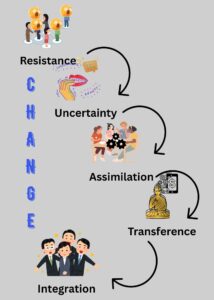
Why the human side of change matters more than ever in the age of AI
Change is one of the few things in life that is truly inevitable. Whether it’s a shift in leadership, a business merger, a team restructure, a new direction in strategy, or as of right now – the rapid rise of AI in the workplace. Change has a way of stirring something deep in all of us.
And here’s the thing, it doesn’t matter how well-planned the change is or how logical the business case looks on paper. If the people side of change isn’t managed well, even the best strategy can quietly fall apart.
This is because change is never really about the process. It’s always about the PEOPLE.
We’ve Been Here Before
Think about the last time your organisation went through a significant change. A new leader at the helm, a merger, a restructure, a shift in company direction. Even when the change made complete sense, there was almost certainly a period of uncertainty, resistance or anxiety among the team. That’s not a sign of weakness. That’s human nature.
Every generation has faced waves of change that felt overwhelming in the moment — the industrial revolution, the arrival of the personal computer, the internet and now AI. Each time, people worried about what they stood to lose. And each time, new opportunities emerged that nobody had even imagined yet.
The organisations that navigated those shifts well all had one thing in common, leaders who understood that managing change means managing people first.
Let’s talk about Technology change
When organisations roll out new technology whether it’s an AI assistant, a new software platform or an automated workflow, the technical implementation is rarely what causes the most headaches. What causes the most headaches is people.
Not because people are resistant or difficult but because change triggers something very human in all of us. Uncertainty. Fear of the unknown. A sense of losing control over something familiar. These are natural, normal responses and they’re exactly why change management needs to be about behaviour first and technology second.
When a team member hears that AI can now research, write, analyse data and draft documents in minutes, their first thought probably isn’t “great, more time for strategic work”, it’s more likely “Is my job safe?”
That’s the conversation leaders need to be ready to have.
What AI Actually Does to Jobs
Let’s take a real example. A marketing coordinator who used to spend half their week researching competitors, drafting content and formatting reports can now use AI tools to do all of that in a fraction of the time. Does that mean they’re no longer needed? Absolutely not.
What it means is that their job gets better. The repetitive, time-consuming tasks that were quietly draining their energy? Gone. Now they can focus on the work that actually requires a human. The creative thinking, the relationship building, the strategic decisions that no AI can replicate.
The same is true across industries. AI doesn’t replace the human – it amplifies what the human is capable of. But only if the human is ready to embrace it.
What do Leaders need to do?
This is where leadership becomes absolutely critical. Because if leaders don’t actively manage the human side of this transition, the fear and resistance will quietly undermine even the best technology rollout.
Great leaders in times of change do three things really well:
They communicate early and often. Not just what is changing, but why and what it means for each person on their team.
They acknowledge the emotional journey. Change isn’t just a logical process, it’s an Emotional one. People need to feel heard before they can move forward.
They focus on opportunity, not just transition. Helping their team see what’s possible on the other side of change, not just what’s being left behind.
Change Needs More Than Good Intentions
It’s easy to assume that if the change is positive and the communication is clear, people will simply come along for the ride. But in reality, change requires far more than a well-written email or a town hall meeting. It requires intentional leadership. Leaders who can read their team, respond to the emotional undercurrents and guide people through the uncertainty with genuine care and skill.
Without that, even the most well-resourced change initiative can stall. Not because the strategy was wrong but because the people weren’t brought along for the journey.
The organisations that will come out ahead — whether they’re navigating a merger, a leadership transition, a cultural shift or the rise of AI in their workplace won’t necessarily be the ones with the best plan. They’ll be the ones with the best-equipped leaders. People who understand human behaviour, who can hold space for uncertainty and who know how to turn disruption into opportunity.
Ready to equip your leaders for the changes ahead?
CTO’s Change Management — Leading through Organisational Change program gives leaders the practical skills they need to guide their teams through uncertainty with clarity and confidence.
Get in touch with us today to find out how we can support your team through the next change that comes along.
Let’s stay curious and keep growing.

Penned by Tara Raj | Corporate Training Options

